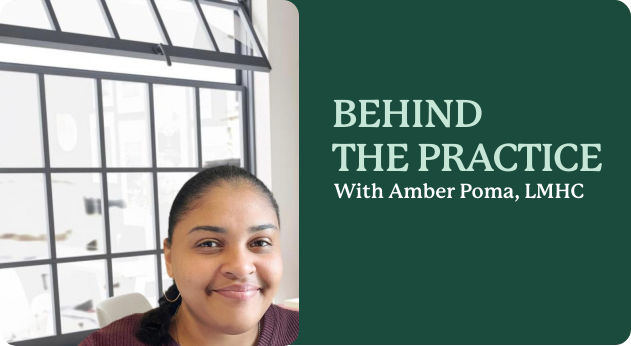
Amber didn't plan to launch her own therapy practice—but she needed a new path with autonomy and space to manage her own burnout. Three years in, she's built a consistent Florida-based business helping adults process childhood trauma.
This year she impressively filed her 2025 taxes the first day possible: January 26. But she had everything ready to file 6 days before the IRS even opened the tax filing system. So we sat down with her to hear more about her private practice journey and why she wanted to be so on top of taxes this year.
You've been in private practice for three years now, which coincides with when you started using Heard. But how long have you been working in mental health overall?
I've been working in mental health since 2018—yeah, I have to think about the dates now. 2018, that's when I graduated. I've worked in several different areas: substance use, children and families, crisis, etc.
What made you decide to go into private practice in the first place?
I basically got tired of working for nonprofit organizations. I just wanted to do something on my own. Truthfully, I should have planned a lot more with it, but I kind of jumped in head first. It seems to be working so far.
How did you feel when you first made that jump?
It was a leap of faith because like I said, I didn't have a plan. I was just kind of putting the pieces together as they came along. But I also felt like that's what I was guided to do. I'm a very spiritual person and I just kind of put my faith in that. It was also kind of confusing. I was learning as I was going along—trial by fire basically. And I've learned and I've grown since I first started my practice in a lot of different ways, the business aspect of it and client-centered aspect of it. At first, I was overwhelmed. But over time I was able to learn how to organize myself and be more productive in my private practice.
I love that leap of faith approach. Looking at your website, you specialize in adults who have experienced childhood trauma. How did you pick that niche?
Based on personal experiences and what I've always been drawn to. It's hard to limit what area of mental health I would like to focus on, but that's the one that kind of—I just want to help other people, and that's just the area I've always been drawn to. Trauma, studying it, analyzing it, understanding it, and then helping other people process and work through it. Especially considering how childhood trauma can manifest physically later in life—autoimmune diseases, cancer, all kinds of things.
It's such important work. And so interesting how trauma can physically manifest.
Yeah, a lot of people don't realize that until later in life.
Let's talk about the business side. What was tax season like for you before you started using Heard?
It was a little bit more simple because I didn't have a business and I just kind of used common tax software to do my taxes. But then Heard is so wonderful because I love the bookkeeping that y'all do and I love the filing for taxes. It is very complicated if you don't know what you're doing as far as filing in business and self taxes.
You operate as an LLC now. Over the past three years in private practice, how has your relationship to the business side evolved? Because there's so much empathy and kindness that comes into therapy, but you also have to put on your business hat.
That's a really good question. The best way to say it is that it's evolved over the past three years. I am that very empathetic, compassionate person. And at first I didn’t put up strong boundaries around no shows or late cancels or just kind of how to even price my sessions. My prices are usually on the low side because I feel guilty for charging people. But now, trying to manage a business and know my worth a little more with the education and experience, I am working on kind of towing that line of business versus therapist and kind of separating the two.
Have you found any strategies particularly helpful when it comes to balancing those two sides?
To be honest, I don't really handle the business side of it. I'm on a telehealth platform so I make them handle it. So, outsourcing, that's great. If something comes up around a no show, I weigh the pros and cons about what a client is telling me—the reason they can't come in. And a lot of times empathy and compassion override. But if it's a consistent overall thing, they keep doing a reoccurring thing, then the business side comes out because it is becoming more of a habit, not a real reason why they're missing. They just don't want to show up and are wasting your time.
So the platforms you use implement the no show fees and cancellation policies, which takes the culpability off of you.
Right. Yes. And they give reasons for it. People get upset about the different billings and don't want to be charged things and I'm like, “Well, I don't manage that. It's not my fault.”
You filed your taxes the first day possible this year. What inspired you to be so on top of it?
Money. [laughs] I was stressed about paying my taxes. I've been worrying about it and trying to get on top of it. I just wanted to just get it out of the way. There's really no real ethical or inspirational reason. I just needed to get it out of the way so I can relieve some of my stress.
Those are very real reasons! Did that stress go away significantly once you knew your taxes were taken care of?
It did. It went away. At least the part where I have to worry about filing and documentation and things went away for the year. So it's one less thing off my plate that I have to worry about.
After three tax seasons with Heard, what keeps bringing you back?
Just because I like the bookkeeping management of it. It just really does make it easier. It puts things in plain view. And that way I don't have to manage it on my own. I mean, I do a little bit, but also verifying it, validating it with Heard is the big one. And with the taxes and the new laws and things constantly changing with the taxes and filing and stuff, it's also helpful each year. It's just kind of a really good asset for my business.
Do you feel like running your own business has affected your personal growth as well?
Oh yes, definitely. I find that I'm more self-aware of what I'm doing. Spiritually and how I've grown as a person, I've come to have more patience and more compassion and empathy for other people—and not just see the face value of how they're acting and what they're doing or what they're saying, but know that there's a root cause underneath it most of the time. So it just kind of helps me interact with people a little bit better. And also what I need for my personal life—most of the time I work every day just about so I don't really, it's very limited on my personal life and personal time, but now I'm starting to make that a priority.
Have you struggled with burnout?
Yes, it has come on throughout the years. But that's where the personal time comes in. I'm starting to now balance it with exercise and going to leisure activities more and trying to kind of disconnect from business and make both separate now.
Last question: If you could go back to the very early days of starting out, what advice would you give yourself?
I would say probably plan it more and put a little bit more detail into what I want to accomplish. Like the name…getting all my ducks in a row and doing research on exactly what I need to start the business. And saving more money and having other resources in place to start it. I give myself more grace and try be gentle with myself. To know that I'm learning and growing in this process.
Manage your bookkeeping, taxes, and payroll—all in one place.

Discover more. Get our newsletter.
Get free articles, guides, and tools developed by our experts to help you understand and manage your private practice finances.