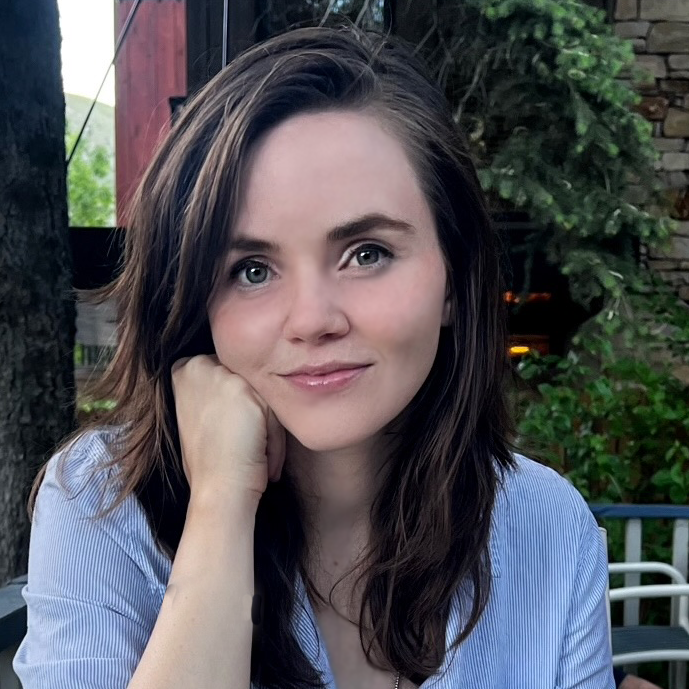

At Heard's Full Caseload Virtual Summit, Heard co-founder and CEO Andrew Riesen sat down with Anim Aweh, LCSW, Brie Hawk, LPC, and Dr. Audra Horney, PhD. for a fireside chat about the financial decisions nobody in private practice wants to talk about out loud. One dropped her insurance panels. One closed her group practice. One never took insurance at all. None of them agree on the right answer, and that's the whole point. This is an edited transcript of that conversation.
Andrew Riesen: I think there's a version of private practice that nobody talks about in an honest way. The financial stress, the rate anxiety, the insurance decisions, the admin that's never ending. These are three very different entrepreneurs who have taken three very different paths. This conversation is not meant to pretend like there's one specific answer. It's meant to share the stories and hopefully some of the war stories on top of the things that have worked really well. So introduce yourselves the way you would describe yourself as an entrepreneur to one of your peers. Not what you'd write in your optimized Psychology Today profile or on your LinkedIn.
Anim Aweh: My name is Anim Aweh. I'm a licensed clinical social worker. And if I'm keeping it real, something a friend told me that I honor and hold on to: I essentially get paid to do what I want as a clinician. I get to explore all my interests and passion and infuse it with this mental health expertise. I get to show up in different facets, in different areas, and show up as the expert in that realm.
Brie Hawk: I'm a licensed professional counselor based in Denver. I've been in private practice for about four years. I have a background in school counseling before I became a therapist, and now I also serve as the VP of Operations for Collective Counseling Solutions. So I'm wearing a lot of hats. As an entrepreneur to a colleague, I would say I got burned out on working for group practices that weren't necessarily equitable or empowering. But I've found my way towards being part of a counseling collective because I don't like working alone. The name of the game for me in private practice has been about connecting. I have an amazing consult group and I'm part of this collective and connected with Heard and just trying to build up my resources so that even though I'm in solo private practice, I don't feel alone.
Audra Horney: I'm a licensed psychologist based in Phoenix, Arizona. And I didn't realize I was an entrepreneur until a few years ago, to be honest. I'm a therapist for men. That's my shtick. That's how I show up on social media and how a lot of men on TikTok and Instagram know me as Dr. Audra. A few years ago I left a group practice to start my own solo practice. From there I started showing up on social media and realized there were cool opportunities in this space. I've expanded my practice to offer intensives, I'm co-hosting my first men's retreat next month, I've developed brand partnerships, I host a directory of therapists for men. I'm a parentified eldest daughter, so that probably says enough right there. I have a lot of stakes in the fire. Entrepreneurship has allowed me to lean into and say yes to the things that light me on fire.
Andrew: Each of you have completely different conclusions about insurance and completely different interactions with it. Anim got out, Brie pulled back, Audra never went in. Brie, you dropped panels. You had clients that left because of it. How did you make peace with that?
Brie: It's hard because I have insurance to thank for filling my practice. And then once I got full and had the agility to start to specify my caseload and specialize, insurance made less and less sense. I went through Alma back in 2023 and I had spent about a year trying to build up my practice via private pay, and it was slow going. I figured, okay, I'll get on this platform and maybe it'll help boost me a little bit. My caseload was full within two weeks and I was overwhelmed. So in that sense, I want to put credit where credit's due. Opening myself up to taking insurance helped my practice get going.
To speak openly, I didn't have a great experience the longer I was on the platform. It felt often misleading. Disempowering. And ultimately venture capital, once again, was the priority. When investors get itchy, the people making decisions have to pay stakeholders back, which meant cuts to clinician pay. The sell on some of these platforms is like, we'll advocate for you to be paid better while you make your insurance practice accessible. And it felt like a bait and switch. We're going to all make our practices accessible and then not get paid in the way that we planned on.
I have friends who can see 35 people a week. I am not one of those people. I do depth work. I work a lot with complex trauma. I have a cap of about 20 sessions, and that's on a good week that I have the energy to do 20 sessions. It came down to calculating how much income do I need to sustain my life and how many sessions can I do a week? How many weeks off am I going to take in the year? It became a math equation of, can I afford to take insurance?
I know without a shadow of a doubt that I show up better as a therapist when I'm well and when I'm not stressed about money or cramming sessions in, or wondering am I doing a good job because I'm exhausted, or am I being a good parent at the end of the day because I've given everything I've got to my clients and have nothing left for my family. I have to prioritize my well-being if I'm going to try and show others how to prioritize their well-being. That's what we're doing as therapists.
Andrew: Brie, what's the difference between getting paneled with an Alma or a Headway or a Grow versus doing it yourself?
Brie: I like to say that some of the bigger players raise the glass ceiling but they don't shatter it. They realize they can increase pay to pull people over, but also cap it where it's more competitive than you can get anywhere else, but not paying as well as they could be paying, in my opinion. For an individual, anyone can go to United's Provider Express and apply to be paneled and take United directly. Same with Blue Cross Blue Shield, Anthem. Whichever insurance company you think of, you can go to their website or their provider portal and sign up. Once they accept your application, they'll offer you a contract rate. For clinicians in private practice that's often below $100 a session and sometimes well below $100 a session.
As far as I can tell, when people ask how big players get better contracts, it seems like it's collective bargaining. You're saying we're bringing a whole network of providers to your customer base versus one-off private practitioners. They pay you less because they can. And it's really shitty, to pardon my words.
For group practice owners, sometimes they start to get that collective bargaining. Year over year you can submit for increases in your contract rate and you may or may not get that. Those increases are usually like $10 or $15. Someone told me recently they got bumped by $2 after being on a panel for two years.
Andrew: Anim, you started a group practice, you ultimately decided to close it. A lot of that was related to the insurance burden. I'd love to hear the story and what led to the breaking point.
Anim: We started our group practice in 2018. We were a cash-pay practice and it was doing well, thriving. But then the pandemic hit and there was a shift. People had job insecurity. There was a lot of uncertainty. In order to keep supporting people, we decided to get on these insurance panels. And that came back and bit us.
One thing I realized looking back in hindsight is that I was wearing way too many hats. I was the clinic director, the clinical supervisor, HR, IT, payroll. And on top of that I was the practice manager who had to chase payments from these insurance companies. When I got a denial, I'm using three hours of my day to try to chase these claims and hope they reimburse me. Faxing. Back and forth. It just stopped making sense.
Payroll, covering payroll became a very anxiety-provoking task every other week. I was burnt out, I was frustrated, and my people deserved better. I created my practice solely to create a space that was sort of the opposite of community mental health. If anybody's ever worked in community mental health, you know how they stretch us, how they pull us in every direction, how they jam-pack our calendars. I wanted to create something different.
One of the things I always ask my clients is, is this sustainable? And that wasn't sustainable for me. That's when I had to make the difficult decision.
Andrew: How did you know you were feeling burnt out? What were the signals?
Anim: The biggest thing was the dread. Every day dreading. I work from home. I love being in my house. But something about coming into this home office was filled with dread and misery. When you're a group practice owner, people depend on you for their livelihood. That pressure was starting to feel heavier and heavier every single day. I was becoming a miserable person at home to my husband, to my family. When things get like that, that's when I know it's time to make a shift. Even when it's a difficult decision.
I considered hiring a CFO. That didn't make financial sense. And that was around the time I found Heard. That was the first time I sat down and looked at the numbers. Looking at the numbers can be scary when you're a business owner. We finally looked at them. The numbers didn't make sense. The numbers justified what the next move needed to be, and that was closing down the practice.
I had to forgive myself. I had to go through grieving and processing this idea of failure. Once I relieved myself of that pressure, it felt like the next best move. I made sure my team landed on their feet. They all got independently licensed, so they were able to spread their wings.
Andrew: Audra, you completely avoided dealing with the insurance companies. What's the honest version of the trade-off?
Audra: The honest version is that my first job as a licensed clinician was working as a 1099 for a group practice run by two psychiatrists. Whoever has experience with MDs will know they don't shy away from charging their worth. They were cool with their private-pay practice and they set the rates sky high and then set mine. I got a rate split.
That was terrifying. I walked in having come from my postdoc, where I don't even want to calculate the hourly rate I might have been earning that year, being more comfortable paying someone else to see me for therapy than receiving payment for my services. The amount of imposter syndrome, the anxiety of, am I worth this? That was a huge mountain for me to climb.
I'm forever grateful to that practice for that trial by fire, because I was forced into it. What it allowed me to realize was that I was worth that rate, that clients will pay for services. And the system is broken. I know we say that a lot. But when it comes to insurance and managed health care, the system is so broken.
I dealt with a lot of my own guilt about being private pay and realizing my services are cost-prohibitive to way more clients than may feel like they have access to it. And the other side of that is that being on insurance panels is career-prohibitive for me. It does not allow me to do the work that I love most, the way that I do it, in a way that does not burn me out, with an ability to diversify my business.
We're helpers. We take on a lot of responsibility as if it is on us to make sure that broken system is fixed. And as much as I wish I could fix it, I can't alone. There are so many pieces that I had to work through as a social justice oriented clinician who, what am I doing creating a practice that is not accessible to everyone? That's work a lot of us have to do. Personally and honestly.
I love my job and I could win the lottery tomorrow and I would still be showing up for my clients on Monday. And I deserve to be able to support my family and build a business that doesn't just drill me into the ground.
Andrew: How do you set your rates?
Audra: I want to be transparent. I think I have one of the highest rates of any therapist in Phoenix right now. And I am okay with that because I've built my business very intentionally and strategically. The niche I focus in is very specialized and there is value behind what I can offer. Setting my rate at a certain level allows me to see a number of clients I can see comfortably in a week. So I'm not burned out. I can show up for myself and my family.
I'm able to offer sliding scale rates to clients as needed. I don't have to fear the loss of income around that. I'm able to devote quite a bit of time to my social media presence, where I'm offering education and support, consultation, collaboration, connection to services. That to me is my pro bono work. And I'm not able to do that if I'm seeing 40 clients a week at $125 per session. There is no gas in the tank for anything else.
My rate, transparently, is $350 per session. I know not every client can pay that rate. I also know I've built a business where I have a full caseload and I'm able to manage a directory of therapists for men. A lot of other therapists who would love to work with these clients have access to them because I'm referring them. I haven't raised my rates in two years. I don't plan to. My rates feel like they're at a good place for me to fund a business and a life that works for me.
Anim: One of the things I blew up on social media about was social work pay transparency. It ruffled a lot of feathers because I was having a public conversation about how much I was earning. Us as therapists, in a female-dominated industry, we don't like to talk about money. Money is very uncomfortable. Some of us even have trauma around money.
I'll tell you how I got comfortable with asking for money. One day I was sitting with a friend and I told him about a speaking opportunity I got, one of my first ones. He said, okay, how much are you charging? I said, $500. He looked at me with disgust. He said, don't you ever charge that again.
Having that transparent conversation, having somebody with way more senior experience tell me that and support me, that was the thing I needed. Until we have transparent conversations about money, we don't know what to ask.
Audra: I've sent emails and had conversations that I never imagined my little people-pleasing self would ever have. And it is so powerful. I've had the honest conversations, I've consulted with my friends, I've sent DMs to my Instagram therapist friends being like, I saw you partnered with them, can you tell me what they paid you? Here's what I'm pitching. This is what they told me. Transparency. I will not shy away from a money conversation.
If we're not consulting with each other on this and building each other up and informing each other, then we're going to get taken advantage of. We're good at just saying, yes, thank you, I'll take whatever little pennies you will give me because I'm just in this work out of the goodness of my heart. Versus being able to step up and say, here's what I'm worth.
I joked with a friend the other day that I'm negotiating my NIL contracts with brands. Name, image, and likeness, which is what athletes do. But the reality is, this is part of what we're doing now. Recognizing we are a brand. If you treat yourself like that, a brand, a business, and think bigger, there is awesome potential out there. We need to support each other in these spaces and be willing to have these honest conversations so we're not selling ourselves short.
Andrew: How did you all think about diversifying your income? And how do you get started doing that?
Anim: For me it was about understanding my skill sets and how those skills can expand or support people outside of the one-to-one space. One of the first things I did when I was living in the Bay Area, this was the height of the Silicon Valley era, I would go to tech events at places like Lyft and talk to the HR people and say, hey, do you have people struggling with their mental health? Can we have a conversation? Then I would go back and pitch those organizations about what I could do as a licensed clinical social worker. What type of services or workshops I could provide.
You have to pitch yourself. Understand what the problem is and put yourself out in this situation to meet the decision makers that are going to potentially bring you in. I got a lot of no's. It didn't get easy. But I didn't allow myself to stop. I knew at the end of the day it's a numbers game.
Through my practice, I've been able to work with different companies in my hometown of Boston. I became the EAP. I negotiated a contract: you pay us $25,000 per quarter, we're going to see your clients and support them. I have two contracts right now for two nonprofits in my hometown.
We have these skill sets. We're clinicians, we're licensed, we're independent, we have the authority to do these things. But sometimes we don't often trust ourselves to allow us to do them. I do EAP work, content creation, consulting, my YouTube channel. Immigration evaluations, I charge $800 per assessment. People are paying those fees, and they're willing to do it. This is a product of over nine years that you're seeing everything manifest. A lot of people see what's happening, they see it online because of course we show the highlight reels. But this has been in motion for a long, long time.
Audra: My process was far less intentional. I started my social media accounts in early 2024 on Instagram and then TikTok that summer. It was initially something I started because I felt locked in to my clinical work and I felt this creative pull. Like an itch I wanted to scratch. I wanted to do something with a different part of my brain.
That has now grown into something much more substantial and beyond what I could have hoped for. But this is not me advocating for social media. This is me advocating for listening to your gut. What I have trusted is my intuition. As therapists, most of us have not gone to business school, but our intuition, our gut is like, really fucking solid. We have a clinical intuition that guides us. You've got a spidey sense. Trust that it translates professionally.
I believed that the more I just continue to opt into things that I was excited about, the money would come. I didn't know exactly how or what opportunities would come. But I trusted that as long as I keep doing things and I structured my business and my rates in a way that could support me exploring other endeavors and even investing into other endeavors before they were monetized.
Think beyond your practice. Think beyond therapist. Call yourself an entrepreneur. Say you are a business owner. If you are on social media, call yourself a content creator. I don't care if you have five followers, you are a content creator. Continue to pour into those buckets that you're excited about because people will see that, people will resonate with that. People will want to pay you for that.
Brie: I saw someone in the chat saying, this is great, but what if you're an introvert? I'm an introvert. I've definitely taken an expansion approach of meeting up one-on-one with people. To all the introverts, you've got to be courageous. You've got to put yourself out there even when you don't feel like it.
One of the hosts of this call, I'm going to shout out Molly Pike. She was my first connection in Denver. I found her website because she does similar things to me. I emailed her and was like, would you like to get coffee? I felt like a kid on the playground being like, hi, I want to be friends. She responded. We got coffee. And now my community is because of Molly. We have an amazing consult group. I found the collective that I'm part of and that I work for because of that.
When you see someone that you're like, they're cool and I want to know them, reach out. Put yourself in that space. For me, it's been all about pursuing community. Someone's like, oh, hey, I know Brie specializes in this, I'm going to connect you with this person. Before you know it, you've got a lot of irons in the fire. Be courageous and trust that you're valuable.
Brie: I want to circle back to the idea of accessibility. As I'm hearing both Anim and Audra talk about their practices, I'm hearing so many ways they're making their practices accessible. I think sometimes in private practice, everyone is thinking about how much do you charge if someone is going to sit in your office for 45 minutes. But that is such a limited scope in viewing what your services are as a private practitioner. Whether you're on social media, offering sliding scale or pro bono sessions, doing community work. I speak to graduate students about private practice, about what their options are, about how to graduate and make a decent income and not fall into predatory practices where you get an 80/20 split, meaning you got 20% of each session from the group practice you worked for. I want to prevent people having that happen. And I'm not charging them for that.
I'd encourage you to think about how you're showing up as a clinician in your community beyond just your one session at a time. There are so many ways to make your practice accessible while making sure your income is protected and you can support your family in a sustainable way.
And then flipping the script. So often we're thinking about whether we're making private practice accessible to clients. But we also have to think about whether we're making it accessible to therapists. I have friends who can take all the insurances and Medicaid because they're in a privileged position with how much their partner makes. I know people who can't afford to do any of that because they're not partnered and they're living in a city like Denver or San Francisco. We have to include ourselves in the humans we're evaluating. Who's this accessible for? Because I hate the idea that certain clinicians feel like they can't access private practice.
Brie: I did not start with this confidence. I've had to work really hard to build it. I've had to overcome imposter syndrome. It's easy to see the person talking in the webinar and be like, I'm so far away from that. But we all started far away from this and are on journeys to continue growing. This confidence was hard earned. Not something I was born with.
Anim: Something I had to start saying to myself is, nothing changes if nothing changes. If I don't put myself out there, if I don't put the content out there, how will people know? How will people see me? How will people resonate with the message? I knew I had something to say, something to teach people. I knew empowerment was part of who I am as a person and as a clinician. You have to be comfortable with the uncertainty on the journey. But you have to trust in yourself enough. You'll start to learn what people need more of, less of, what they're interested in. The people will teach you. But you have to start.
Audra: My feedback to anyone who has that self-doubt or imposter syndrome is that it's not oversaturated until you show up. Because you're not there yet. You are an N of one. Nobody can speak to your experience. No one in your specialization who has that same niche as you is going to talk about it and connect with clients the exact way that you do. Truly believing that and knowing, until I show up, there's a void in this field. There's a void whether it be on social media or on YouTube or in groups in my community. Are too many people doing it? Is it oversaturated? No. Not until you're there. There's a spot there until you take it.
Andrew: How do you think about protecting your time and your capacity? How do you plan your week to be able to do all these things?
Anim: One of the things I learned from leaving community mental health and leaving group practice was that I was going to always prioritize self. I'll be straight up with clients. I had a client reach out for a 5:30 PM appointment on a Friday last week. I said, no, I don't work that late on Fridays. Getting comfortable with establishing boundaries for people and myself was one of the most important things.
In terms of stretching myself or doing different things, I ask: does it feel good? Does it energize me? Does it make me feel like I'm being a part of something bigger? Those are the projects I want to be a part of. I get lots of email inquiries about people wanting me to do different things. If it doesn't feel good for me, if it doesn't feel aligned, then I'm okay with saying no.
There are travel contracts that come up, $10,000 a week, everybody's like, Anim, are you going? I'm like, no, I don't need to. I'm at peace right now in my practice. The money that I need is coming in. I know what I need. Sometimes we have to understand what is it that you need to thrive. What is your magic number? Once you get clear on that, you diminish the outside influences. Figure out what your number is. That's how I can say no or yes to certain things, because I know there's alignment.
Brie: This takes us full circle with the insurance discussion. I work for Collective Counseling Solutions, and the co-founders started it because they were on a mission to bring transparency to the insurance space. Another thing with Alma: I didn't know they took a cut per claim on top of your membership until I started seeing how much clients' deductibles were. And I was like, wait a second, you're getting how much per session and sending how much to me and I'm paying a membership fee?
I started as a clinician in the collective to take insurance through a more transparent organization. One thing led to another. I feel like now my work has expanded. Instead of doing one-on-one work with therapy clients, I have all these therapists and a community of therapists that I can empower and almost do business therapy with. To say, how do we help lift you into practices that you love?
In full transparency, I see two clients a week at this point. I refuse to be a business leader that's disconnected from the work that my business is empowering people to do. Some weeks I'm like, I probably shouldn't be seeing any clients. Other weeks I'm grateful that I am. That's how I balance it. I'm doing very little clinical work so that I can spend time empowering other clinicians and disrupting the industry.
Andrew: How do you define enough right now? Has that definition changed?
Anim: For me, enough is, can my bills get paid? Can I still have time and space to do the things that fill my tank? If the answer is yes on both, then I have enough. And gratitude. I'm grateful for the opportunities. I'm grateful for what I have. And is it sufficient for what I need? That's how I define enough.
Audra: I don't know yet. I'm working on it. It's a work in progress. I've realized that entrepreneurship is something I love. My life is so full. There are parts of me that are like, cool, do the most all the time and just keep doing that. The amazing part is that I don't know what enough is. Because the idea of if it's not a hell yes, it's a no, is so powerful. And you build your own business that you're totally obsessed with. You're getting things you want to say hell yes to all the time. And so I've said hell yes to too many things and then I've stretched myself so thin that I'm having to redefine how to set those boundaries.
I'm in my era of outsourcing. And it's scary to outsource anything at any point in your business because we DIY this stuff and we can do a lot. We're very teachable. You search a YouTube, you can manage a lot on your own. And at a certain point, you can't keep growing your business and take care of yourself if you're not going to start to outsource. Read Buy Back Your Time by Dan Martell. It helps you audit your time and identify what you should be doing and what should be outsourced. I'll report back. Maybe I'll let you know next year if I figured out what enough is.
Brie: I think enough is ever evolving. Currently it looks like having margin in my life to exercise, to go on bike rides with my daughter, to connect with friends, get coffee with my aunt. And not be slammed with back-to-back-to-back things that are obligations to other people. Enough right now is making enough and doing the things that give me margin to also be a person in the midst of it.
This conversation was part of Heard's Full Caseload: Growing Your Private Practice Income Virtual Summit. Heard is financial management software built for therapists in private practice.
Manage your bookkeeping, taxes, and payroll—all in one place.

Discover more. Get our newsletter.
Get free articles, guides, and tools developed by our experts to help you understand and manage your private practice finances.