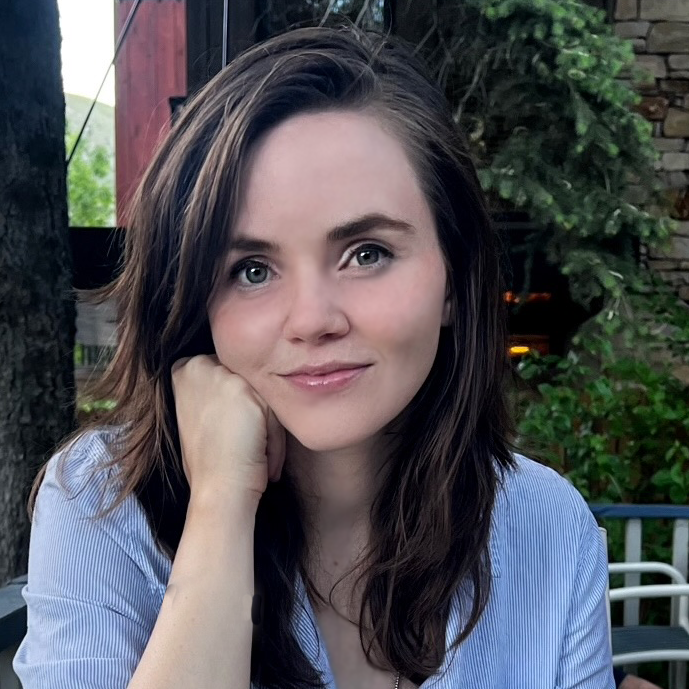

Marie Lavigne is a licensed clinical social worker based in Alaska who started her telehealth private practice, Let Your Life Speak, in August 2024. She’s been a social worker since 1999, spent 15 years in oncology, and now serves clients across the entire state—from Anchorage to some of Alaska’s most remote communities. She runs her practice alongside a full-time day job in community mental health, and she’s doing it all with remarkable intention.
We sat down with Marie to talk about why she launched her practice, what it’s like serving clients across one of the most isolated states in the country, and how she keeps the business side from overtaking the work she loves.
You’ve been a social worker since 1999. What made you decide to open your own private practice?
During COVID, I decided to start doing telemedicine because it really fit a need for people that were homebound and felt like they couldn’t access services. And I started my private practice in August of 2024. It actually came at the request of several clients who felt like they couldn’t reach out because they were in rural parts of Alaska or they were in gaps of services. I got asked if I would start a practice that was outside of the agency that I was working in.
It supplements the work that I do, and I try to prioritize clients who are in oncology or are doing areas of work that I’m interested in outside of community mental health that I work in during my day job. It’s fabulous. I really enjoy it. It’s very life fulfilling.
You spent 15 years as an oncology social worker. How does that show up in your private practice now?
I’m partnering with one physician’s office for referrals as well as doing survivorship work. So, I do some retreats and a survivorship support group. That’s one area of my private practice. I also partner with a couple different platforms for referrals as well as using a variety of marketing programs to get referrals.
Your practice is called Let Your Life Speak. Where did that name come from?
I had “let your life speak” on my personal business cards. It’s a phrase that really means something to me—that our life shows everything about us. How we act, the words that we say, the values that we live comes out and expresses itself in our actions.
What I look at as a therapist is that we have the solutions in front of us and when we solve for patterns—when we work together, we see the solution. So I’m listening with the client for where the solution is in how they’ve lived and where their goals are. Usually we find the solution within and around them. That’s where Let Your Life Speak came from.
You serve clients all across Alaska via telehealth. What challenges come up that feel unique to practicing there?
Many people are isolated. Their families don’t live here unless they’re born and raised here. So, there’s that separation. A lot of military, a lot of veterans. We also have people that are long-distance caregiving. Their primary elders are not in Alaska and maybe they bring them back home or they’re doing caregiving for other family members, and that can be a tremendous strain on their well-being.
Some areas of specialty medical care don’t exist in Alaska. I’m working with one oncology client who—all her specialized oncology care is in a state not in Alaska. So she travels for her cancer care outside of Alaska on a regular basis. Her medical team is not in Alaska and that’s a tremendous expense financially, but also a sense that you’re always one step away from who you need. And that creates a sense of isolation.
Isolation sounds like it comes up a lot in your work. How do you help clients with that?
I always talk about circles of support. Where do we begin with maybe the 10 ripples around you to create support? Oftentimes people feel disconnected until we look at ways that they can feel reconnected. Kind of like a spiderweb. We often have more support available to us, but we need to see not only where we ask for help, but who’s around us extending a hand.
When people struggle with anxiety, depression, panic, stress, or illness, they often don’t see that people are there for them or they may not have the strength—either because of illness or fatigue—to be able to reach out. So, recreating those connections is really important in mental health.
And isolation is the greatest disease of mental health.
I love that phrase and it really resonates. I read a study on how loneliness and social isolation are as dangerous to overall health as smoking 15 cigarettes a day.
I talk to my clients all the time about the power of 10—that we need 10 meaningful contacts a week. And they may not always be friends and family. It may be the barista, the store clerks. I try to know the names of all the store clerks that I interact with and get to know them a little bit more because that’s my community, right? My local grocery store—I get to know people.
Knowing your medical clinic as you go in, or your dental clinic, or knowing the people that you interact with in places that you frequent—maybe at a restaurant—it allows us to feel engaged and we create other ways to maybe better know a co-worker and to create a sense of connection.
But you want 10 contacts minimum a week.
You work with a lot of addiction in Alaska. What patterns do you see?
Sometimes we do a lot of things with cross addiction. I run a group in my primary position specific to people coming out of bariatric surgery, and there’s a lot of cross addiction to alcohol, drugs, shopping, other things because they give up food as a primary source of comfort.
It’s not uncommon for people to change things. I’ve worked with sex addicts who then get addicted to other sources. When they start working on one addiction, they cross over. So it’s important to look at ways to do holistic healing and to work on the underlying issues. That’s where the most important growth happens.
We know in the recovery world that sobriety equals connection. So, to not be isolated is a very important part of holistic recovery as well.
Let’s talk about the business side. What’s been the toughest part of running a private practice alongside your day job?
I’m accelerating slowly with intention. I also work with a business consultant to do my visioning and to look at that over a period of time. Growth always needs to be at a pace that’s right for me and to not grow faster than what I have the capacity for.
I’ve looked at tools that work and then streamlined when tools don’t work. Choosing insurance panels carefully, choosing how I do my own software and billing. I’m open-minded to look at new resources. I talk to other clinicians. I revisit every quarter what I’m doing and know that my projections need to match where my growth is going to be. But I also want to have fun. I don’t want this to be a burden. I want it to be uplifting.
When you think about success in your practice, what does the “magic number” look like for you?
The magic number is quality of services. It’s not just the bottom line on my pocketbook. I mean, I would love to just say it’s about dollars, but it’s really about quality.
Therapy is such an empathetic field, but you still have to run a viable business. How do you balance wanting to serve different populations with making the practice sustainable?
I’ve got a mix of payer sources. I do see some clients that are coming in sliding fee scale. I see some clients that are pro bono. That’s a smaller part of my practice. I see private insured and then I work with one platform that’s more like a membership base where people pay a monthly premium to receive services. I try to look at a mixed payer source as a good way to have people reach their needs.
If you work seven days a week between both jobs, how do you manage burnout?
I ebb and flow the hours that I open up for clients. Work is very seasonal, so I look at which nights I open up more hours, which nights I cut back. I was doing a lot more Sunday hours and for a while I was getting a lot of Sunday clients and I’ve just rolled that back.
Monday I’ve shifted my day job so now Mondays is my private practice day, and I’ve got some really fulfilling clients on Mondays. I’m testing different days of the week to see which populations are interested in services. That’s allowing me to get a right client mix, but also to try to free up some evening time. And I have a dog that needs attention and love just like I do my significant other. So I mix it up.
You mentioned reviewing your numbers every quarter. What does that process look like?
I’m constantly looking at each quarter: are my numbers matching not only my growth but matching a work-life balance that is sustainable? The choice to come to Heard was because the system that I had last year wasn’t meeting my needs. So to say I’m open-minded to look at new resources—I talk to other clinicians, I look at revisiting every quarter what I’m doing.
If you could go back to the very beginning of your career in mental health, what advice would you give yourself?
Consultation, supervision, support, and keep learning.
Manage your bookkeeping, taxes, and payroll—all in one place.

Discover more. Get our newsletter.
Get free articles, guides, and tools developed by our experts to help you understand and manage your private practice finances.